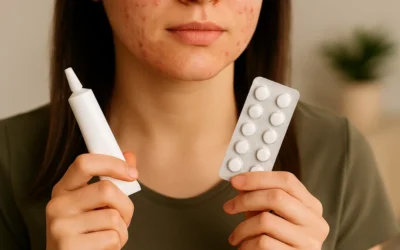
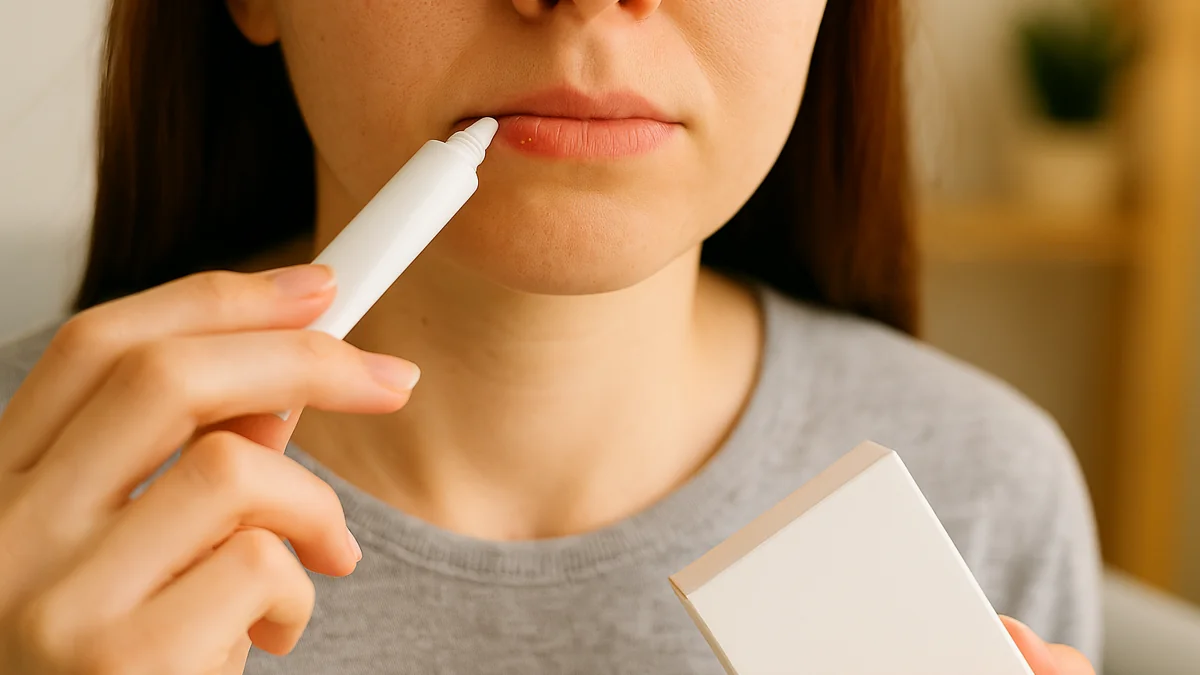
Cold sores (herpes labialis) are small blisters caused by the herpes simplex virus, usually on or around the lips. They often start with tingling, then blister, weep and crust before healing. Treatment works best when started early.
Explaining cold sores
Cold sores are caused by herpes simplex virus type 1 (HSV‑1), which lies dormant in nearby nerve cells after a first infection. From time to time the virus can reactivate and travel back to the skin surface, causing a new sore in the same place.
- Stages: tingling or burning → small fluid‑filled blisters → oozing → scabbing → healed skin.
- How they spread: direct skin contact during an active episode (kissing, oral contact) or sharing items like lip balm or towels.
- Contagious period: from the first tingle until the skin is fully healed. The risk is highest while blisters/oozing are present.
- Who gets them? Anyone can. Recurrences are more likely with stress, illness, sun/wind exposure or hormonal change.
What causes cold sores?
Typical triggers that can wake the virus and bring on an outbreak include:
- Sun exposure and windburn without lip protection
- Fatigue, stress, intercurrent illness and fever
- Menstruation and other hormonal shifts
- Dental work, chapped or injured lips/skin
- Lowered immunity
How to get rid of cold sores
Early treatment shortens symptoms and reduces shedding. Options that people in Ireland commonly use:
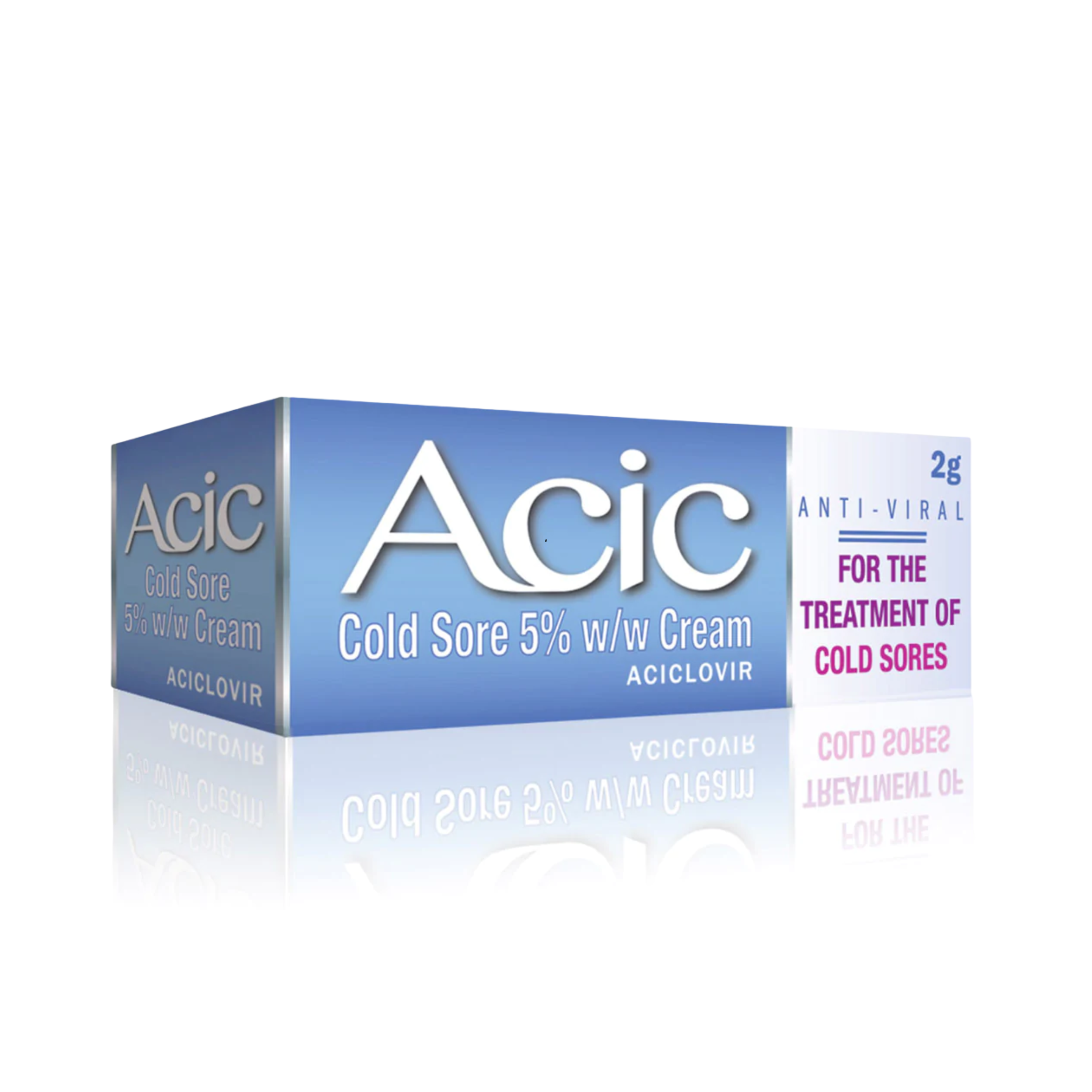
- Aciclovir 5% cream: start at first tingling; apply thinly five times a day for up to five days. Continue for a full course even if it looks improved.
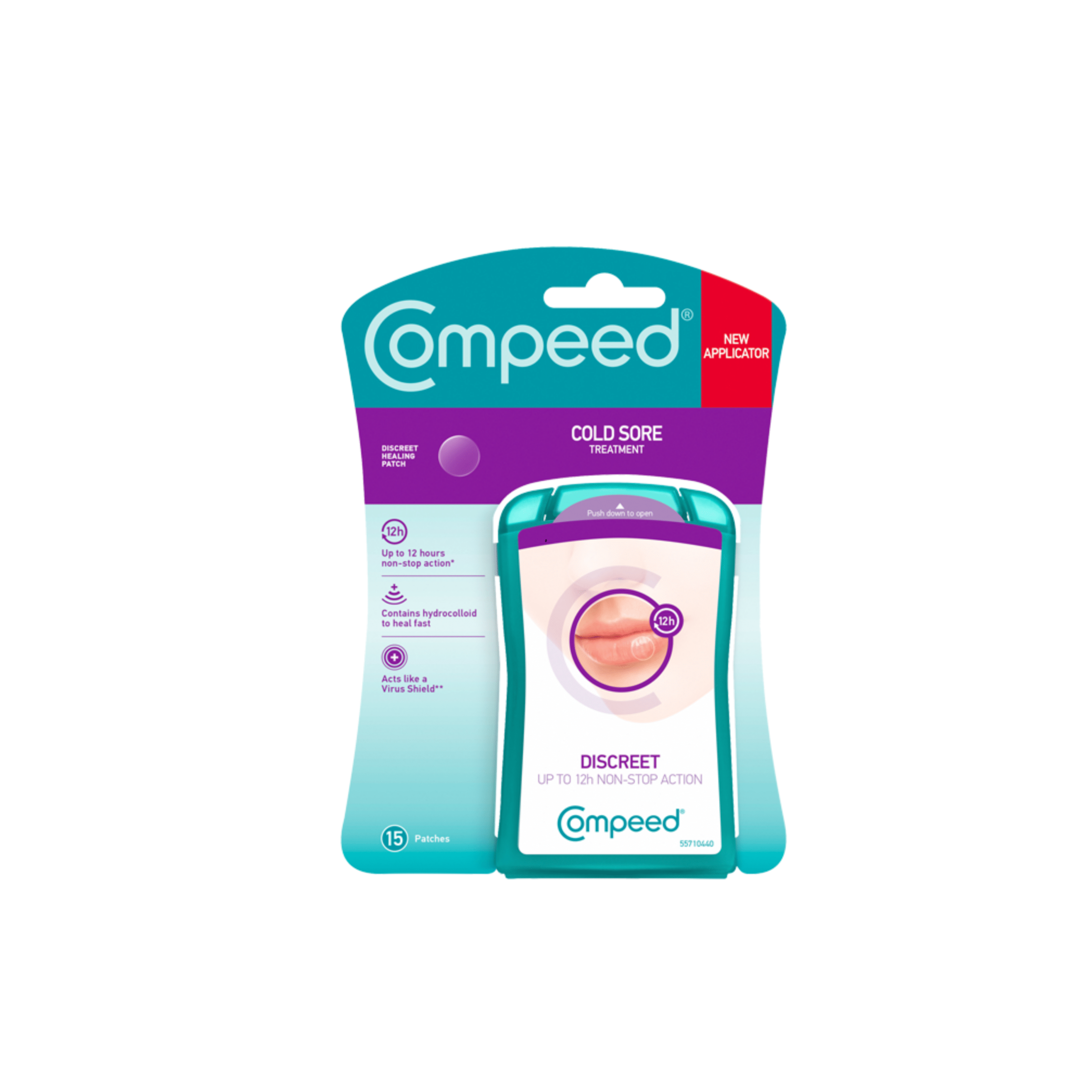
- Hydrocolloid patches: form a clean, protective environment, help conceal the sore and reduce touching. Use alone, or over cream once the surface is dry.
- Prescription antivirals: for severe or frequent outbreaks a doctor may prescribe aciclovir or valaciclovir tablets. These are particularly useful if sores affect work, sport or travel plans.
- Pain and fever relief: paracetamol or ibuprofen can help general discomfort (if appropriate for you).
Self-care and prevention tips
- Act early at the tingling stage and avoid picking or peeling the scab.
- Wash hands before/after touching the area; use a cotton bud to apply cream.
- Do not share cups, cutlery, lip products or towels while healing.
- Use SPF 30+ lip balm in strong sun or wind; reapply during outdoor activity.
- Identify personal triggers (lack of sleep, stress) and plan ahead for travel or events.
How to get a cold sore prescription online
Step 1: choose an online doctor and complete a short questionnaire. You can use Zava for same-day assessment.
Step 2: if antiviral tablets are appropriate, the doctor issues a prescription and sends it to your chosen pharmacy via Healthmail. If you choose Healthwave, your doctor can address it to healthwave.dundrum@healthmail.ie.
Step 3: the pharmacy confirms availability and explains how to use treatment. If you choose Healthwave, we pack discreetly and deliver typically within 1–2 working days, or arrange convenient collection.
Prefer to speak directly with a doctor?
Book a video consultation with a registered doctor via Eirdoc.
Prefer to see a doctor in person?
L-lysine for cold sores
L-lysine is an amino acid supplement that some people take at the first sign of a cold sore or during known triggers (sun exposure, exams, travel). Evidence is mixed, but many patients report fewer or shorter outbreaks when used alongside early antiviral treatment and good lip care. If you take other medicines or have medical conditions, check with a pharmacist first.
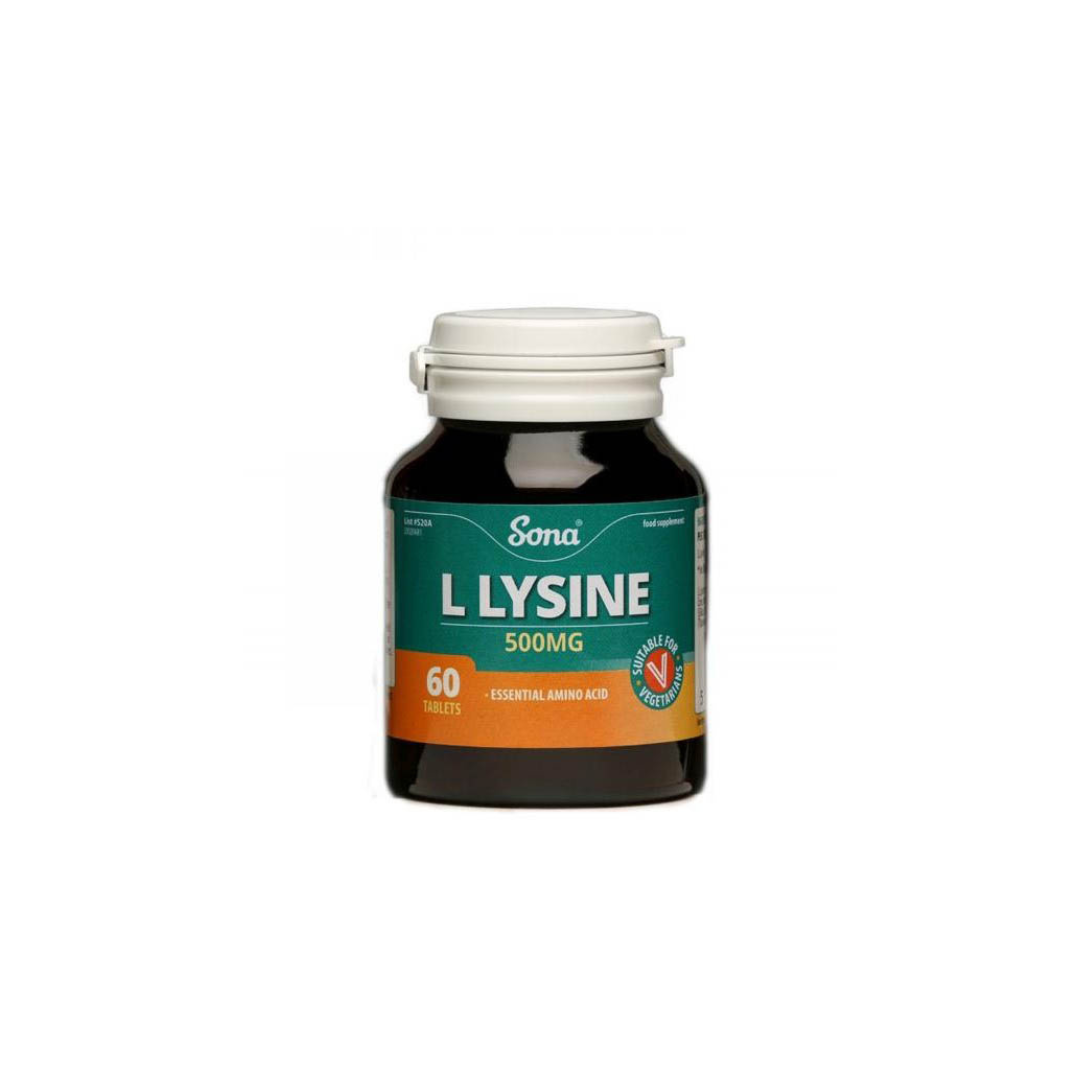
Sona L-lysine 500 mg
- Amino acid supplement
- Often taken during personal trigger periods
- Ask a pharmacist if on other medicines
- When people use it: at tingling, for a few days during triggers, or as part of a prevention plan.
- Pairs well with: SPF lip balm, good sleep and stress management, and prompt aciclovir cream.
- Who should check first: those pregnant or breastfeeding, with kidney disease, or taking long-term medicines.
When to seek medical advice
- Sores near the eye, a red or painful eye, or vision symptoms
- Very severe, prolonged or frequently recurring outbreaks
- Cold sores in infants, during late pregnancy, or if you are immunocompromised
Supports available in Ireland
FAQs
How long do cold sores take to heal?
Most cold sores heal within 7–10 days. Starting treatment at the tingling stage can shorten this. If a sore lasts beyond two weeks, seek advice.
When is a cold sore contagious?
From the first tingling through to healed skin, with the highest risk while blisters are moist or weeping. Avoid kissing and sharing items during this time.
Do I always need antiviral tablets?
No. Many episodes respond to aciclovir 5% cream used early and regularly. Tablets are used for severe, prolonged or frequent outbreaks after medical assessment.
Can I prevent cold sores?
Manage triggers, use SPF lip protection, and act promptly with treatment. Some people use short courses of L‑lysine during known triggers; evidence is mixed—ask a pharmacist if you take other medicines.